Quick: name as many movies about the Holocaust as you can off the top of your head.
(I'll give you a second...)
All right, time's up. By now, I'm guessing you've listed off Schindler's List, The Pianist, and Life is Beautiful, with Sophie's Choice, Defiance, The Reader, Downfall, The Boy in the Stripped Pajamas and The Diary of Anne Frank possibly rounding out the list, depending on how far back your movie fandom reaches.
Now, let's try the same thing for movies about slavery in America.
Roots and Django, right? Maybe Amistad? We're coming up on 150 years since slavery was finally abolished in the US, and filmmakers are still gun-shy on the subject, preferring story-lines that work around it, not within it. How afraid is Hollywood of approaching the topic in earnest, you ask? Just last year, we saw Django Unchained (gloriously) fly off the handle straight into fantasy, just as Lincoln found a way to detail the abolition of slavery with nary a slave on screen. Thereby, it should come as no surprise that 12 Years a Slave, a film unafraid to look at the deplorable institution for exactly what it was, is a British import, with only a few Americans involved on any level. It's been a long, sordid trudge for this gut-wrenching movie to finally light up silver screens, but thank god it did. Brutal and difficult as it may be to watch, the world needs 12 Years a Slave.
Director Steve McQueen's third feature tells the true story of Solomon Northup (Chiwetel Ejiofor), an African American living the life of a free man in pre-civil war New York until he is drugged, abducted, and sold into slavery. Educated with skills as a carpenter and a violinist, Northup is forced to hide almost every vestige of his intelligence and autonomy on a hellish journey that takes him through the antebellum south. The horror show eventually sees him sold to Edwin Epps (Michael Fassbender) an alcoholic mess of Christianity-fueled contradictions who harbors a twisted, unrelenting lust for Patsy (Lupita Nyong'o), a stoic servant constantly subjected to her master's impulses.
While I usually rally against pictures that are championed on account of concept alone, the trappings and importance of 12 tempt one to into the land of superlatives. Thank god, then, that the execution here is wholly worthy of the tale. Relatively undiscovered cinematographer Sean Bobbitt takes us on a visceral, almost hypnotic trip, captured on gloriously grainy film, colors exploding off of the screen. His use of extended takes, as seen previously in McQueen's other two films, Hunger and Shame, is employed to mesmerizing effect here, detailing the mania of slave auctions, refusing to turn away from moments of jaw-dropping suffering. Hans Zimmer even offers a typically bombastic score, pulling bullets of sweat from your temples with hair-rasing grandiosity. Suffice to say, this isn't your standard, prepackaged, 'important movie,' fair; if you come in expecting nothing more than a dusty history lesson, you're about to get leveled.
Impressive as its achievements may be, the film is not without fault. The scenes in which Solomon is a free man, witnessed at the movie's opening, and then periodically through-out, play like dream sequences. They neglect to observe the racism that Northup likely faced even as a liberated individual, and, perhaps more damningly, fail to truly establish Ejiofor's character before casting him down into the individuality-eviserating plague that was slavery. As great as the actor is in the film, it isn't until Solomon hits rock bottom that we really understand what he's about, making him a semi-passive bystander for much of the film's runtime. Finally, the movie shows a strange infatuation with stunt-casting, pulling you out of McQueen's all-encompasiing grip with faces belonging to Paul Giamatti, Benedict Cumberbatch, Paul Dano, Michael K. Williams (Omar from The Wire), Taran Killam (of Saturday Night Live fame), and, most distractingly, Brad Pitt. Many of these actors end up justifying their presence, but certainly not all.
These drawbacks are, of course, a small price to pay when one considers the film's many riches. As previously alluded, Ejiofor is terrific, exuding grace and honor even at his lowest points. Many of the film's most entrancing moments occur when McQueen and Bobbitt simply leave the camera on the thespian and let him work, chilling bones by simply looking off into the horizon, an ocean of feeling in his eyes. Nyong'o is every bit his match, a vision of strength and pride, emotions ever simmering just beneath the surface, only rarely (and explosively) revealed. Then there's Fassbender, the protagonist of McQueen's previous two films, stepping off to the side to play a monster of a man, lighting the screen ablaze every moment he's on it. His character's offenses wouldn't be as vile if we couldn't see the mirth on the actor's face, that twitch of pleasure at having such complete, irrevocable control over another human being. A shot in which his sky-blue eyes, often emphasized in the film, silently bore into Solomon's soul is almost too much to bare.
12 Years a Slave is a classic on arrival, a sprawling epic and a hero's journey that possesses more than a handful of scenes and moments that will forever more be entrenched in my brain. Its craft alone merits the praise the film has received thus far, but I want to come back to its cultural importance for a second. Movies matter. Really, they do. As the most comprehensive artistic medium there is (sight, sound, photography, technology, etc.), the imagery and feelings elicited by film, for better or worse, come to shape how we perceive events, especially those set in the past. There's a reason that people who don't read about such things think they know how the British Monarchs of old dressed and behaved, or why those who don't remain abreast of world news now know at least something about the Rwandan genocide. Crazy as it may sound, there's little doubt in my mind that the images witnessed in Schindler's List deeply effect the way that most Americans think about and relate to the Holocaust.
Lament the state of our age if you feel so inclined, but, for most people, film is an easy and extremely impactful method of relaying information. Numbers in text books, the vessel through which history is often relayed to young minds, just don't have the same traction. 12 Years a Slave gives a face to the abundance of suffering that slavery wrought, a visual for which our generation was absolutely starved. Here's to hoping that films detailing other under-examined American crimes, such as the treatment of Native Americans, or the employment of Chinese internment camps, might some day force those who think we've primarily moved past racism and extensive injustice to reflect on their callous perspectives. The past may be the past, but some blemishes don't just wash out.
Grade: A
Total Pageviews
Wednesday, November 20, 2013
Wednesday, November 13, 2013
Thor: The Dark World (Release Date: 11-8-2013)
The Marvel Cinematic Universe may be the biggest (see: most profitable) enterprise at the multiplexes these days, but they've also sort of painted themselves into a corner. Of the first six canonized films (Iron Man, The Incredible Hulk, Iron Man 2, Thor, Captain America: The First Avenger, and The Avengers) only one wasn't an origin story (Iron Man 2), the others simply tasked with setting the table. Where most franchises feel a greater freedom to take risks and shake things up in later installments, 'Phase Two,' as folks have taken to calling the studio's present slate of films, seems too inter-connected to dabble in such tomfoolery. With four films (Captain America: The Winter Soldier, Guardians of the Galaxy, The Avengers: Age of Ultron, and Ant-Man), four TV shows (centered on Daredevil, Jessica Jones, Iron Fist and Luke Cage), and two more untitled flicks on the docket for 2016 and 2017, this is no time to be taking characters and potential plot developments off the board. As enticing as this multi-layered set-up is, the focus on the long game can make individual installments feel like they're just treading water. Oh, hello, Thor: The Dark World; we were just talking about you!
More so than in any previous Marvel entry, Thor: The Dark World's plot feels more like an excuse to hang out with characters we know and love than a proper page-turner. An alien species once again haunts the gods of Asgard, the Dark Elves of Svartalfheim filling the, 'weird-looking bad guy that we don't really care about,' slot previously occupied by the Frost Giants (Thor) and Chitauri (The Avengers). They have this red stuff ('the Aether'), you see, and it's very bad. So bad, in fact, that Thor (Chris Hemsworth) must travel back to earth, reuniting with his lost love Jane Foster (Natalie Portman), and eventually being forced into a tenuous team-up with his lecherous brother, Loki (Tom Hiddleston). Scary guys try to pull the universe into a state of darkness, Thor swings his hammer, and there are two post-film snippets (one mid-credits, one after) that essentially tell us to buy more tickets to more movies.
In the name of fairness, the latest Thor does have its pleasures. Asgard, as seen in the first installment and this one, is the most visually engaging place that the MCU has yet taken us, all celestial wonderment, and gold. The film also has a solid sense of humor, and wisely commits a good deal of its obligatory climactic action sequence to coaxing laughter. Hiddleston is a lot of over-the-top fun as well, though those who claim that he, 'steals the show,' ought to reconsider their personal definitions of theft. The character of Thor gives Hemsworth precious-little to work with, Anthony Hopkins looks like he'd rather be taking a nap, and Portman's Astrophysicist still sounds curiously like a Valley Girl. Hiddleston's cast mates are kind of like those people who leave a big bowl of candy on their front door on Halloween with a sign that says, "Please take one": How could he not steal this movie?
Speaking of Portman, why is she is these movies, anyways? Carving out 20-plus minutes to have your muscly hero fall for a personality-free beauty is a faux-pas that a lot of action movies commit, but casting an Academy Award winner in the role only makes it worse. The whole audience knows Portman can act, and watching her stumble through these movies without a character or purpose to speak of is an unrelenting distraction. This is why the Megan Foxes of the world exist: because pure eye candy with an obvious brain isn't pure eye candy, and it sticks out like a sore thumb. Sorry for the aside, but her casting really takes me out of these movies, in a way that even Hopkins can't match. At least he immediately commands reverence and respect. They cast him as a king, right?
Look, this article isn't intended to be a total take-down of the latest Thor. The two hours pass briskly, are pleasant on the eyes, and I'll doubtlessly be in line for Captain America: The Winter Soldier this spring. Maybe that's just it; I've come to expect a certain level of quality from the guys behind this whole MCU thing, and Thor: The Dark World is one of their few entries to not quite make it. Unlike Iron Man 3, which was surprisingly open to diverging from the playbook, the god of thunder's latest romp is something far less inspiring: just another Thor movie.
Grade: C+
More so than in any previous Marvel entry, Thor: The Dark World's plot feels more like an excuse to hang out with characters we know and love than a proper page-turner. An alien species once again haunts the gods of Asgard, the Dark Elves of Svartalfheim filling the, 'weird-looking bad guy that we don't really care about,' slot previously occupied by the Frost Giants (Thor) and Chitauri (The Avengers). They have this red stuff ('the Aether'), you see, and it's very bad. So bad, in fact, that Thor (Chris Hemsworth) must travel back to earth, reuniting with his lost love Jane Foster (Natalie Portman), and eventually being forced into a tenuous team-up with his lecherous brother, Loki (Tom Hiddleston). Scary guys try to pull the universe into a state of darkness, Thor swings his hammer, and there are two post-film snippets (one mid-credits, one after) that essentially tell us to buy more tickets to more movies.
In the name of fairness, the latest Thor does have its pleasures. Asgard, as seen in the first installment and this one, is the most visually engaging place that the MCU has yet taken us, all celestial wonderment, and gold. The film also has a solid sense of humor, and wisely commits a good deal of its obligatory climactic action sequence to coaxing laughter. Hiddleston is a lot of over-the-top fun as well, though those who claim that he, 'steals the show,' ought to reconsider their personal definitions of theft. The character of Thor gives Hemsworth precious-little to work with, Anthony Hopkins looks like he'd rather be taking a nap, and Portman's Astrophysicist still sounds curiously like a Valley Girl. Hiddleston's cast mates are kind of like those people who leave a big bowl of candy on their front door on Halloween with a sign that says, "Please take one": How could he not steal this movie?
Speaking of Portman, why is she is these movies, anyways? Carving out 20-plus minutes to have your muscly hero fall for a personality-free beauty is a faux-pas that a lot of action movies commit, but casting an Academy Award winner in the role only makes it worse. The whole audience knows Portman can act, and watching her stumble through these movies without a character or purpose to speak of is an unrelenting distraction. This is why the Megan Foxes of the world exist: because pure eye candy with an obvious brain isn't pure eye candy, and it sticks out like a sore thumb. Sorry for the aside, but her casting really takes me out of these movies, in a way that even Hopkins can't match. At least he immediately commands reverence and respect. They cast him as a king, right?
Look, this article isn't intended to be a total take-down of the latest Thor. The two hours pass briskly, are pleasant on the eyes, and I'll doubtlessly be in line for Captain America: The Winter Soldier this spring. Maybe that's just it; I've come to expect a certain level of quality from the guys behind this whole MCU thing, and Thor: The Dark World is one of their few entries to not quite make it. Unlike Iron Man 3, which was surprisingly open to diverging from the playbook, the god of thunder's latest romp is something far less inspiring: just another Thor movie.
Grade: C+
Saturday, November 2, 2013
Arcade Fire: Reflektor (Release Date: 10-29-2013)
There were signs, but I chose to ignore them. There was the high-concept, 'The Reflektors,' side project and/or in-joke. There was that first single, an exciting deviation from the band's normative sound that to this day still feels at least slightly under-cooked. And there was their star-crossed showing on the season premiere of Saturday Night Live, a performance miserably botched by the venue's technical and sonic short-comings that nevertheless emitted some weird vibes from the band themselves. None of it exactly screamed out-right failure, but meager success isn't exactly what we come back to Arcade Fire for, now is it? No one makes an event out of their every move quite like the Canadian wunderkinds, and, after winning the Album of the Year Grammy in early 2011, stowing away for 3-plus years, enlisting production assistance from LCD Soundsystem's James Murphy, and recording the follow-up in an abandoned Jamaican castle, you'd be forgiven for expecting the world out of Reflektor.
The single aspect of Reflektor's pre-release buzz that had me most excited is, to these ears, the disc's largest detriment; the involvement of Mr. Murphy. The coupling was awfully tasty on paper, a big-band veteran pairing with a sizable roster who consistently harbors the loftiest ambitions in the North American musical landscape. But the things that have always made Murphy's LCD tracks so special (danceable, bass-driven grooves, crisp sounds, repetition, and sass) come at such immediate contrast with Arcade Fire's strengths (guitar-led anthems, fearless earnestness, orchestral sounds, and general BIGNESS) that one wonders how we all didn't see this one coming. Hype Starts Here has a long history of stated love and embarrassing bias in favor of both of these artists, but I also love both cheese and sour candy, too. Not everything mixes.
Reflektor's 70-minute runtime is divided between two discs, and the break is clear as day. The first, which opens with the aforementioned Reflektor, is the more musically up-front edition, employing simple grooves, and marching along with minimal deviation. While LCD often did this to tremendous effect, Arcade Fire is used to finding its power from guitars and vocals, not the rhythm section from which Murphy and co. made their living. We Exist and Joan of Arc just don't have the bass-and-drums muscle to remain engaging through-out their too-long runtimes, while We Already Know and Normal Person (especially) breath more fire in theory than in practice. While one can't really blame their miss-guided punk ambitions on Murphy (after all, did he have anything to do with Month of May?), it's frustrating to hear them play against their strengths to such a degree.
Disc Two is much less rocky (pun intended), though the allegedly epic pairing of Awful Sound (Oh Eurydice) and It's Never Over (Oh Orpheus) falls mind-numbingly short of The Suburbs' Half Light double-header, not to mention Funeral's Neighborhood suite. That said, Afterlife is yet another treasure from the band's catalogue, as almost-tacky as all of their best songs, this time unveiled in lush, billowy colors. Same goes for closer Supersymmetry, whose glowing outro might just be the album's highlight. Disappointing as Reflektor's whole may be, dismissing it as an out-and-out disaster would be disingenuous. Flashbulb Eyes deserves credit for propping-up the first act, as do Reflektor and Here Comes the Night Time, though both are more enjoyable in concept than in practice. Listenable as it may be, Arcade Fire's newest is something we've never heard from these guys before: A half-baked concept in need of some extra time behind the scenes.
Grade: B
The single aspect of Reflektor's pre-release buzz that had me most excited is, to these ears, the disc's largest detriment; the involvement of Mr. Murphy. The coupling was awfully tasty on paper, a big-band veteran pairing with a sizable roster who consistently harbors the loftiest ambitions in the North American musical landscape. But the things that have always made Murphy's LCD tracks so special (danceable, bass-driven grooves, crisp sounds, repetition, and sass) come at such immediate contrast with Arcade Fire's strengths (guitar-led anthems, fearless earnestness, orchestral sounds, and general BIGNESS) that one wonders how we all didn't see this one coming. Hype Starts Here has a long history of stated love and embarrassing bias in favor of both of these artists, but I also love both cheese and sour candy, too. Not everything mixes.
Reflektor's 70-minute runtime is divided between two discs, and the break is clear as day. The first, which opens with the aforementioned Reflektor, is the more musically up-front edition, employing simple grooves, and marching along with minimal deviation. While LCD often did this to tremendous effect, Arcade Fire is used to finding its power from guitars and vocals, not the rhythm section from which Murphy and co. made their living. We Exist and Joan of Arc just don't have the bass-and-drums muscle to remain engaging through-out their too-long runtimes, while We Already Know and Normal Person (especially) breath more fire in theory than in practice. While one can't really blame their miss-guided punk ambitions on Murphy (after all, did he have anything to do with Month of May?), it's frustrating to hear them play against their strengths to such a degree.
Disc Two is much less rocky (pun intended), though the allegedly epic pairing of Awful Sound (Oh Eurydice) and It's Never Over (Oh Orpheus) falls mind-numbingly short of The Suburbs' Half Light double-header, not to mention Funeral's Neighborhood suite. That said, Afterlife is yet another treasure from the band's catalogue, as almost-tacky as all of their best songs, this time unveiled in lush, billowy colors. Same goes for closer Supersymmetry, whose glowing outro might just be the album's highlight. Disappointing as Reflektor's whole may be, dismissing it as an out-and-out disaster would be disingenuous. Flashbulb Eyes deserves credit for propping-up the first act, as do Reflektor and Here Comes the Night Time, though both are more enjoyable in concept than in practice. Listenable as it may be, Arcade Fire's newest is something we've never heard from these guys before: A half-baked concept in need of some extra time behind the scenes.
Grade: B
Saturday, October 26, 2013
Oscar Predictions 2013: Round 2
Rave reviews everywhere it's played, over-due director, and V.I.M. (very important movie) status. No 2013 release has really come out and declared itself the frontrunner. As of now, 12 is looking like the movie to beat.
2. Gravity (Previous Ranking: 3)
Tough one to rank: I find it pretty hard to envision the film winning best picture, but missing out on a nomination seems even more impossible. We'll go with #2.
3. Inside Llewyn Davis
(Previous Ranking: 8)
As if the Academy's pre-existing love of the Coen brothers wasn't enough, the film has been killing it on the festival circuit. Missing out on the big race would be a substantial surprise at this point.
4. Captain Phillips (Previous Ranking: 6)
Already both a critical and box office favorite, CP should clean up in the technical categories. I personally don't see any real impediments on its path to nomination-town.
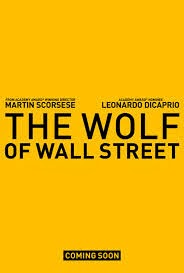
5. The Wolf of Wall Street (Previous Ranking: 1)
As previously mentioned, a Scorsese movie near the end of the year is almost a lock on principle. The fact that the four films listed above already have their staunch advocates causes TWoWS to slip a bit, but if early word is positive, watch out.
6. American Hustle (Previous Ranking: 5)
Same as above, only David O. Russell isn't quite at Martin Scorsese levels just yet. That said, the academy LOVED his last two flicks (The Fighter and Silver Linings Playbook).
7. Nebraska (Previous Ranking: 7)
Yet again we have a film-maker who's previously found himself on Oscar's, 'good list.' The pictures' smaller scale has me a little worried, but early word has been resoundingly positive.
8. Blue Jasmine (Previous Ranking: 49)
It's Woody! It's Cate! It's on a very, very (see: very) short list of films Oscar was actually interested in during the first half of 2013. Ironically, that might help it stand out in voters' minds.
9. The Butler (Previous Ranking: 26)
Huge box office success, 'important,' subject matter... and Oprah. Who cares if the reviews were mixed? There's plenty of pedigree here.
10. Saving Mr. Banks (Previous Ranking: 13)
A film set within Walt Disney Studios? About the making of Mary Poppins? Starring previous winners Tom Hanks and Emma Thompson? There's a lot to like here, even if the film remains unseen.
----------------------------------------------------------------
As of now, I am predicting these ten films to be nominated (I don't have some crazy math equation that helped me determine this number; these just seem like the ones). The following is where I rank the next movies in line.
----------------------------------------------------------------
11. August: Osage County (Previous Ranking: 11)
12. All is Lost (Previous Ranking: Unranked)
13. Dallas Buyers Club (Previous Ranking: 24)
14. Her (Previous Ranking: Unranked)
15. Labor Day (Previous Ranking: 29)
16. Before Midnight (Previous Ranking: 10)
17. Philomena (Previous Ranking: Unranked)
18. Out of the Furnace (Previous Ranking: 21)
19. Mud (Previous Ranking: 22)
20. The Secret Life of Walter Mitty (Previous Ranking: Unranked)
Tuesday, October 15, 2013
Captain Phillips (Release Date: 10-11-2013)
At first glance, the premise of Captain Phillips appears more than a little troubling. You probably already know the story: in 2009, a group of Somali pirates hijacked a U.S. container ship, taking the boat's captain (and this film's namesake) hostage, demanding millions in return. On paper, this pitting of innocent Americans against armed African assailants reads like star-spangled propaganda of the worst kind. Throw in Mr. Apple Pie himself, Tom Hanks, and you've got a sterling tale of perseverance, and courage under fire. As it turns out, it's not quite so easy.
It never is with this Paul Greengrass guy! The british adrenaline junkie (see: film director) has always found a way to confound familiar storytelling rhetoric, wether it be his contained, humanized approach to the 9/11 attacks in United 93, or his choice to turn Matt Damon into a near-silent tragic hero in the actor's last two Bourne installments. He looks at each story he tells from innumerable angles, neglecting reductive thinking at every turn, making him the perfect helmer for CP messy globalization think-piece.
Perhaps his and the team's finest decision this go-around is allowing Phillips to share co-protagonist duties with the pirates' feather-weight leader Muse (Barkhad Abdi), a juxtaposition that reveals the pressures and responsibilities each must deal with, creating a fascinating parallel between two hugely different worlds. The strategy wouldn't work is Abdi wasn't up to the task, but the first-time feature actor is Hanks' perfect foil, natural, nervous, aggressive, and unnervingly raw. Hanks, who will likely land his first acting Oscar nomination since 2001, deserves every last ounce of the golden man, at first underplaying the role before gradually peeling off layers of calm and cool, unraveling before our eyes. There's a scene near the end that's almost too astoundingly acted to believe; I'd elaborate, but you'll know when you see it.
As intriguing and unselling as Captain Phillips is as a geopolitical parable, it's at least as accomplished as white-knuckle thriller. Cinematographer Barry Ackroyd imports all of the kinetic energy and tension he brought to The Hurt Locker and United 93 straight into the film, and editor Christopher Rouse keeps the heat on with his pace and sharp cuts. There have certainly been movies with more intense scenes or passages, but I honestly can't remember the last time an action movie had me on the edge of my seat for the length of time that Captain Phillips did (This could have been you, Gravity, but bless your zero-g heart for getting off screen while you were still way, way ahead). Two-plus hours have rarely gone by so fast, or conjured so much stress; if you take your movies with a healthy helping of sweat and a side of political intrigue, Greengrass' latest is an absolute must.
Grade: A-
It never is with this Paul Greengrass guy! The british adrenaline junkie (see: film director) has always found a way to confound familiar storytelling rhetoric, wether it be his contained, humanized approach to the 9/11 attacks in United 93, or his choice to turn Matt Damon into a near-silent tragic hero in the actor's last two Bourne installments. He looks at each story he tells from innumerable angles, neglecting reductive thinking at every turn, making him the perfect helmer for CP messy globalization think-piece.
Perhaps his and the team's finest decision this go-around is allowing Phillips to share co-protagonist duties with the pirates' feather-weight leader Muse (Barkhad Abdi), a juxtaposition that reveals the pressures and responsibilities each must deal with, creating a fascinating parallel between two hugely different worlds. The strategy wouldn't work is Abdi wasn't up to the task, but the first-time feature actor is Hanks' perfect foil, natural, nervous, aggressive, and unnervingly raw. Hanks, who will likely land his first acting Oscar nomination since 2001, deserves every last ounce of the golden man, at first underplaying the role before gradually peeling off layers of calm and cool, unraveling before our eyes. There's a scene near the end that's almost too astoundingly acted to believe; I'd elaborate, but you'll know when you see it.
As intriguing and unselling as Captain Phillips is as a geopolitical parable, it's at least as accomplished as white-knuckle thriller. Cinematographer Barry Ackroyd imports all of the kinetic energy and tension he brought to The Hurt Locker and United 93 straight into the film, and editor Christopher Rouse keeps the heat on with his pace and sharp cuts. There have certainly been movies with more intense scenes or passages, but I honestly can't remember the last time an action movie had me on the edge of my seat for the length of time that Captain Phillips did (This could have been you, Gravity, but bless your zero-g heart for getting off screen while you were still way, way ahead). Two-plus hours have rarely gone by so fast, or conjured so much stress; if you take your movies with a healthy helping of sweat and a side of political intrigue, Greengrass' latest is an absolute must.
Grade: A-
Wednesday, October 9, 2013
Gravity (Release Date: 10-4-2013)
I have been waiting on Gravity for the better part of two years now, constantly checking for updates, chomping at the bit to finally get a peak. Director Alfonso Cuarón last made our collective heads spin with the stunning Children of Men, a masterpiece that belongs near the top of any Best-Movies-of-the-2000's list that's worth its salt, but that dystopian blast was released a long seven years ago. Mounting his follow-up epic was a messy process indeed, full of production delays and pushed release dates, all while the creative team involved struggled to create and tame new technology and techniques. But the buzz was always there: rumors about the movie's incredible visuals began circulating near the end of 2011, prompting me to rank the film as an early frontrunner in last year's Oscar chase (to be clear, the flick was released 541 days after I made that prediction). So when the film finally arrived, I went in expecting an ascent to heaven, a visit from god, an explanation of all things, and whatever else it is that a feature cannot actually provide. This, ladies and gentlemen, is no way to anticipate a movie.
Which isn't to say that Gravity is a big let down or anything (pun intended); in fact, it's about as close to perfect as movies really get, relaying a notably small story across an impossibly enormous canvas. Sandra Bullock and George Clooney star as Ryan Stone and Matt Kowalski respectively, a pair of astronauts sent into orbit to perform simple satellite repair. Stone is new to this wrap, the very opposite of Kowalski, here on his swan-song mission, and laid back as all get-out.
That's all we really get before tragedy strikes, sending our leads drifting off into the endless abyss of space, desperately seeking refuge (desperate might be a strong word for any Clooney character, really. Concerned, maybe?). In a twist that feels much more unfamiliar than it should, Cuarón and company feel no need to pad their tale of survival with cascades of backstory and cut-aways, nor do they mistake an epic runtime for an epic experience (the film lasts a lightning-fast 90 minutes). Clooney and Bullock are the only thespians we ever see, and with a touch of obligatory mother-daughter hang-ups, the film trusts that the charisma of its leads and the perils they experience will be plenty for the viewer to take in. It's right.
Cinematographer Emmanuel Lubezki, who already has two of the most stunningly photographed films of the last decade on his resume (The Tree of Life, and the aforementioned Children of Men) simply must finally capture his elusive first Oscar. Regardless of the holes factual physicists are already poking at, experiencing Gravity on the big screen legitimately conjures feelings of weightlessness, drift, and impossible altitude, owing its visceral feel to Lubezki, and his brilliant use of 3D. Oh, and its impossibly beautiful, moments of tear-jerking grandeur spiraling into heart-pounding action seamlessly.
So why the semi-downer intro? Because, as I watched Gravity, waiting for it to solve all of the mysteries of the universe, my expectations got in the way of my viewing experience, a problem I expect others who see its 97% rating on Rotten Tomatoes, and hear their friends rant and rave will encounter. For such an ethereal viewing, Cuarón's film is remarkably disinterested in both pathos and ethos: it's almost more of a ride than an actual movie, like one of those video simulators at theme parks, taken to the grandest scale humanly imaginable. Deeply connecting with Gravity on an emotional level is nearly impossible, which was clearly the intention all along. This is a spectacle of the very highest order, and Cuarón doesn't want anything to get in the way of his audience's unparalleled ascent to the stars. Make sure to get a good grip on those armrests; you're gunna need 'em.
Grade: A-
Which isn't to say that Gravity is a big let down or anything (pun intended); in fact, it's about as close to perfect as movies really get, relaying a notably small story across an impossibly enormous canvas. Sandra Bullock and George Clooney star as Ryan Stone and Matt Kowalski respectively, a pair of astronauts sent into orbit to perform simple satellite repair. Stone is new to this wrap, the very opposite of Kowalski, here on his swan-song mission, and laid back as all get-out.
That's all we really get before tragedy strikes, sending our leads drifting off into the endless abyss of space, desperately seeking refuge (desperate might be a strong word for any Clooney character, really. Concerned, maybe?). In a twist that feels much more unfamiliar than it should, Cuarón and company feel no need to pad their tale of survival with cascades of backstory and cut-aways, nor do they mistake an epic runtime for an epic experience (the film lasts a lightning-fast 90 minutes). Clooney and Bullock are the only thespians we ever see, and with a touch of obligatory mother-daughter hang-ups, the film trusts that the charisma of its leads and the perils they experience will be plenty for the viewer to take in. It's right.
Cinematographer Emmanuel Lubezki, who already has two of the most stunningly photographed films of the last decade on his resume (The Tree of Life, and the aforementioned Children of Men) simply must finally capture his elusive first Oscar. Regardless of the holes factual physicists are already poking at, experiencing Gravity on the big screen legitimately conjures feelings of weightlessness, drift, and impossible altitude, owing its visceral feel to Lubezki, and his brilliant use of 3D. Oh, and its impossibly beautiful, moments of tear-jerking grandeur spiraling into heart-pounding action seamlessly.
So why the semi-downer intro? Because, as I watched Gravity, waiting for it to solve all of the mysteries of the universe, my expectations got in the way of my viewing experience, a problem I expect others who see its 97% rating on Rotten Tomatoes, and hear their friends rant and rave will encounter. For such an ethereal viewing, Cuarón's film is remarkably disinterested in both pathos and ethos: it's almost more of a ride than an actual movie, like one of those video simulators at theme parks, taken to the grandest scale humanly imaginable. Deeply connecting with Gravity on an emotional level is nearly impossible, which was clearly the intention all along. This is a spectacle of the very highest order, and Cuarón doesn't want anything to get in the way of his audience's unparalleled ascent to the stars. Make sure to get a good grip on those armrests; you're gunna need 'em.
Grade: A-
Friday, September 6, 2013
King Krule: 6 Feet Beneath the Moon (Release Date: 8-24-2013)
If you thought I was all done lavishing praise on 19-year-old musical prodigies for a few weeks, guess again! Archy Marshall, previously known as Zoo Kid before hopping on over to new moniker King Krule, has recorded ahead-of-his-age tracks for years, but a full LP has evaded him. Until now, that is. 6 Feet Beneath the Moon, released on a none-too-common Saturday unveiling (in order to celebrate Marshall's last teenage birthday), finally gives us a whole track list from a young man fully accustomed to under-sharing. We know Marshall's got lightning in him, but does he already have a full-on storm? The answer, as anyone with their head screwed on straight would have likely predicted, is a little bit of both.
King Krule's music is tough to describe, a whirring mix of reverb-heavy guitars, jazzy interludes, sneaky hip-hop influence, and one of the most peculiar yowls this side of Tom Waits. 6 Feet affords him entire universes in which to spread his limbs out and let his freak flag fly, the results proving just as exhilarating as they are chaotic. Through the disc's enormous 14-track, 52 minute runtime (overkill by almost any definition of the word), we make pit stops in guitar pop (Easy Easy), woozy balladry (Baby Blue), bratty punk (A Lizard State), minimalism (Cementality), and whatever the heck Neptune Estate is. It's a wildly uneven listen, but the lows are infrequent, and the highs scrape the sky.
In truth, drawing the line between good KK tracks and lesser ones is fairly simple; Marshall is at his best when he's not trying to out-smart himself. I'm still searching for what makes both Boarder Lines and Ceiling so immediate, each requiring only minimal instrumentation to positively engulf ears in their groove. A Lizard State, on the other hand, employs both pace and profanity never before witnessed in Marshall's music, and it comes off more like a failed experiment than a final album cut. Same goes for the aforementioned Cementality, which simply doesn't have enough going on to fully engage. It's an even bigger bummer when one considers the omission of recent non-LP cuts like Rock Bottom and Bleak Bake, tracks hugely superior to the lesser material on hand here.
The one exception to this rule is Neptune Estate, a singularly knotty track that has no use for traditional songwriting rhetoric. More of a place than a pure song, the tune hinges on a rickety, low-key piano loop, inviting horns, guitars, found sounds, bogged-down percussion, and defeated laments to slowly seep into the mix. It's a break-up song that actually captures those confused emotions, feelings of loss, pride, frustration, and disconnect wafting off of the track's deceptively warm sounds. It's probably the album's finest track, though Baby Blue's lovelorn waltz, the sassy second half of Has This Hit?, and lead single Easy Easy are all wholly worthy of mention.
And then there's that late-album dose of deja vu, when the kid unspools his spruced-up rendition of Out Getting Ribs, Marshall's single that first turned heads way back in April of 2010. The changes are minimal; Krule's broken croon is brought further to the forefront, and those woozy, distant guitar strums are a bit more sinewy and palpable. Somehow, though, these deviations cast the track in a far different light than the one I fell in love with a couple years ago, a contrast that speaks to the album at large. Having concocted a sound all his own at such an absurdly young age, Archy Marshall is now wrestling with how to make his next maturational leap, which is quite the problem to have on your debut LP. I'll take the older version for my money, but the new-fangled rendition is an understandable effort from an up-and-comer dedicated to tinkering. 6 Feet Beneath the Moon might not be the great LP that one might hope for from King Krule, but I'd bet the house that he's got it in him somewhere. Stay tuned; Archy Marshall's run is just beginning.
Grade: B+
King Krule's music is tough to describe, a whirring mix of reverb-heavy guitars, jazzy interludes, sneaky hip-hop influence, and one of the most peculiar yowls this side of Tom Waits. 6 Feet affords him entire universes in which to spread his limbs out and let his freak flag fly, the results proving just as exhilarating as they are chaotic. Through the disc's enormous 14-track, 52 minute runtime (overkill by almost any definition of the word), we make pit stops in guitar pop (Easy Easy), woozy balladry (Baby Blue), bratty punk (A Lizard State), minimalism (Cementality), and whatever the heck Neptune Estate is. It's a wildly uneven listen, but the lows are infrequent, and the highs scrape the sky.
In truth, drawing the line between good KK tracks and lesser ones is fairly simple; Marshall is at his best when he's not trying to out-smart himself. I'm still searching for what makes both Boarder Lines and Ceiling so immediate, each requiring only minimal instrumentation to positively engulf ears in their groove. A Lizard State, on the other hand, employs both pace and profanity never before witnessed in Marshall's music, and it comes off more like a failed experiment than a final album cut. Same goes for the aforementioned Cementality, which simply doesn't have enough going on to fully engage. It's an even bigger bummer when one considers the omission of recent non-LP cuts like Rock Bottom and Bleak Bake, tracks hugely superior to the lesser material on hand here.
The one exception to this rule is Neptune Estate, a singularly knotty track that has no use for traditional songwriting rhetoric. More of a place than a pure song, the tune hinges on a rickety, low-key piano loop, inviting horns, guitars, found sounds, bogged-down percussion, and defeated laments to slowly seep into the mix. It's a break-up song that actually captures those confused emotions, feelings of loss, pride, frustration, and disconnect wafting off of the track's deceptively warm sounds. It's probably the album's finest track, though Baby Blue's lovelorn waltz, the sassy second half of Has This Hit?, and lead single Easy Easy are all wholly worthy of mention.
And then there's that late-album dose of deja vu, when the kid unspools his spruced-up rendition of Out Getting Ribs, Marshall's single that first turned heads way back in April of 2010. The changes are minimal; Krule's broken croon is brought further to the forefront, and those woozy, distant guitar strums are a bit more sinewy and palpable. Somehow, though, these deviations cast the track in a far different light than the one I fell in love with a couple years ago, a contrast that speaks to the album at large. Having concocted a sound all his own at such an absurdly young age, Archy Marshall is now wrestling with how to make his next maturational leap, which is quite the problem to have on your debut LP. I'll take the older version for my money, but the new-fangled rendition is an understandable effort from an up-and-comer dedicated to tinkering. 6 Feet Beneath the Moon might not be the great LP that one might hope for from King Krule, but I'd bet the house that he's got it in him somewhere. Stay tuned; Archy Marshall's run is just beginning.
Grade: B+
Subscribe to:
Posts (Atom)