Total Pageviews

Saturday, October 26, 2013

Oscar Predictions 2013: Round 2


1. 12 Years a Slave (Previous Ranking: 34)
        Rave reviews everywhere it's played, over-due director, and V.I.M. (very important movie) status. No 2013 release has really come out and declared itself the frontrunner. As of now, 12 is looking like the movie to beat.
2. Gravity (Previous Ranking: 3)
        Tough one to rank: I find it pretty hard to envision the film winning best picture, but missing out on a nomination seems even more impossible. We'll go with #2.
3. Inside Llewyn Davis 
(Previous Ranking: 8)
        As if the Academy's pre-existing love of the Coen brothers wasn't enough, the film has been killing it on the festival circuit. Missing out on the big race would be a substantial surprise at this point.
4. Captain Phillips (Previous Ranking: 6)
        Already both a critical and box office favorite, CP should clean up in the technical categories. I personally don't see any real impediments on its path to nomination-town.
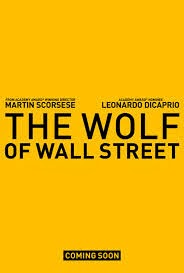
5. The Wolf of Wall Street (Previous Ranking: 1) 
        As previously mentioned, a Scorsese movie near the end of the year is almost a lock on principle. The fact that the four films listed above already have their staunch advocates causes TWoWS to slip a bit, but if early word is positive, watch out.
6. American Hustle (Previous Ranking: 5)
        Same as above, only David O. Russell isn't quite at Martin Scorsese levels just yet. That said, the academy LOVED his last two flicks (The Fighter and Silver Linings Playbook).
7. Nebraska (Previous Ranking: 7)
        Yet again we have a film-maker who's previously found himself on Oscar's, 'good list.' The pictures' smaller scale has me a little worried, but early word has been resoundingly positive.
8. Blue Jasmine (Previous Ranking: 49)
        It's Woody! It's Cate! It's on a very, very (see: very) short list of films Oscar was actually interested in during the first half of 2013. Ironically, that might help it stand out in voters' minds.
9. The Butler (Previous Ranking: 26)
        Huge box office success, 'important,' subject matter... and Oprah. Who cares if the reviews were mixed? There's plenty of pedigree here.
10. Saving Mr. Banks (Previous Ranking: 13)
        A film set within Walt Disney Studios? About the making of Mary Poppins? Starring previous winners Tom Hanks and Emma Thompson? There's a lot to like here, even if the film remains unseen.
----------------------------------------------------------------
As of now, I am predicting these ten films to be nominated (I don't have some crazy math equation that helped me determine this number; these just seem like the ones). The following is where I rank the next movies in line.
----------------------------------------------------------------
11. August: Osage County (Previous Ranking: 11)
12. All is Lost (Previous Ranking: Unranked)
13. Dallas Buyers Club (Previous Ranking: 24)
14. Her (Previous Ranking: Unranked)
15. Labor Day (Previous Ranking: 29)
16. Before Midnight (Previous Ranking: 10)
17. Philomena (Previous Ranking: Unranked)
18. Out of the Furnace (Previous Ranking: 21)
19. Mud (Previous Ranking: 22)
20. The Secret Life of Walter Mitty (Previous Ranking: Unranked)

Tuesday, October 15, 2013

Captain Phillips (Release Date: 10-11-2013)

        At first glance, the premise of Captain Phillips appears more than a little troubling. You probably already know the story: in 2009, a group of Somali pirates hijacked a U.S. container ship, taking the boat's captain (and this film's namesake) hostage, demanding millions in return. On paper, this pitting of innocent Americans against armed African assailants reads like star-spangled propaganda of the worst kind. Throw in Mr. Apple Pie himself, Tom Hanks, and you've got a sterling tale of perseverance, and courage under fire. As it turns out, it's not quite so easy.

        It never is with this Paul Greengrass guy! The british adrenaline junkie (see: film director) has always found a way to confound familiar storytelling rhetoric, wether it be his contained, humanized approach to the 9/11 attacks in United 93, or his choice to turn Matt Damon into a near-silent tragic hero in the actor's last two Bourne installments. He looks at each story he tells from innumerable angles, neglecting reductive thinking at every turn, making him the perfect helmer for CP messy globalization think-piece.

        Perhaps his and the team's finest decision this go-around is allowing Phillips to share co-protagonist duties with the pirates' feather-weight leader Muse (Barkhad Abdi), a juxtaposition that reveals the pressures and responsibilities each must deal with, creating a fascinating parallel between two hugely different worlds. The strategy wouldn't work is Abdi wasn't up to the task, but the first-time feature actor is Hanks' perfect foil, natural, nervous, aggressive, and unnervingly raw. Hanks, who will likely land his first acting Oscar nomination since 2001, deserves every last ounce of the golden man, at first underplaying the role before gradually peeling off layers of calm and cool, unraveling before our eyes. There's a scene near the end that's almost too astoundingly acted to believe; I'd elaborate, but you'll know when you see it.

        As intriguing and unselling as Captain Phillips is as a geopolitical parable, it's at least as accomplished as white-knuckle thriller. Cinematographer Barry Ackroyd imports all of the kinetic energy and tension he brought to The Hurt Locker and United 93 straight into the film, and editor Christopher Rouse keeps the heat on with his pace and sharp cuts. There have certainly been movies with more intense scenes or passages, but I honestly can't remember the last time an action movie had me on the edge of my seat for the length of time that Captain Phillips did (This could have been you, Gravity, but bless your zero-g heart for getting off screen while you were still way, way ahead). Two-plus hours have rarely gone by so fast, or conjured so much stress; if you take your movies with a healthy helping of sweat and a side of political intrigue, Greengrass' latest is an absolute must.

Grade: A-

Wednesday, October 9, 2013

Gravity (Release Date: 10-4-2013)

        I have been waiting on Gravity for the better part of two years now, constantly checking for updates, chomping at the bit to finally get a peak. Director Alfonso Cuarón last made our collective heads spin with the stunning Children of Men, a masterpiece that belongs near the top of any Best-Movies-of-the-2000's list that's worth its salt, but that dystopian blast was released a long seven years ago. Mounting his follow-up epic was a messy process indeed, full of production delays and pushed release dates, all while the creative team involved struggled to create and tame new technology and techniques. But the buzz was always there: rumors about the movie's incredible visuals began circulating near the end of 2011, prompting me to rank the film as an early frontrunner in last year's Oscar chase (to be clear, the flick was released 541 days after I made that prediction). So when the film finally arrived, I went in expecting an ascent to heaven, a visit from god, an explanation of all things, and whatever else it is that a feature cannot actually provide. This, ladies and gentlemen, is no way to anticipate a movie.

        Which isn't to say that Gravity is a big let down or anything (pun intended); in fact, it's about as close to perfect as movies really get, relaying a notably small story across an impossibly enormous canvas. Sandra Bullock and George Clooney star as Ryan Stone and Matt Kowalski respectively, a pair of astronauts sent into orbit to perform simple satellite repair. Stone is new to this wrap, the very opposite of Kowalski, here on his swan-song mission, and laid back as all get-out.

        That's all we really get before tragedy strikes, sending our leads drifting off into the endless abyss of space, desperately seeking refuge (desperate might be a strong word for any Clooney character, really. Concerned, maybe?). In a twist that feels much more unfamiliar than it should, Cuarón and company feel no need to pad their tale of survival with cascades of backstory and cut-aways, nor do they mistake an epic runtime for an epic experience (the film lasts a lightning-fast 90 minutes). Clooney and Bullock are the only thespians we ever see, and with a touch of obligatory mother-daughter hang-ups, the film trusts that the charisma of its leads and the perils they experience will be plenty for the viewer to take in. It's right.

        Cinematographer Emmanuel Lubezki, who already has two of the most stunningly photographed films of the last decade on his resume (The Tree of Life, and the aforementioned Children of Men) simply must finally capture his elusive first Oscar. Regardless of the holes factual physicists are already poking at, experiencing Gravity on the big screen legitimately conjures feelings of weightlessness, drift, and impossible altitude, owing its visceral feel to Lubezki, and his brilliant use of 3D. Oh, and its impossibly beautiful, moments of tear-jerking grandeur spiraling into heart-pounding action seamlessly.

        So why the semi-downer intro? Because, as I watched Gravity, waiting for it to solve all of the mysteries of the universe, my expectations got in the way of my viewing experience, a problem I expect others who see its 97% rating on Rotten Tomatoes, and hear their friends rant and rave will encounter. For such an ethereal viewing, Cuarón's film is remarkably disinterested in both pathos and ethos: it's almost more of a ride than an actual movie, like one of those video simulators at theme parks, taken to the grandest scale humanly imaginable. Deeply connecting with Gravity on an emotional level is nearly impossible, which was clearly the intention all along. This is a spectacle of the very highest order, and Cuarón doesn't want anything to get in the way of his audience's unparalleled ascent to the stars. Make sure to get a good grip on those armrests; you're gunna need 'em.

Grade: A-

Friday, September 6, 2013

King Krule: 6 Feet Beneath the Moon (Release Date: 8-24-2013)

        If you thought I was all done lavishing praise on 19-year-old musical prodigies for a few weeks, guess again! Archy Marshall, previously known as Zoo Kid before hopping on over to new moniker King Krule, has recorded ahead-of-his-age tracks for years, but a full LP has evaded him. Until now, that is. 6 Feet Beneath the Moon, released on a none-too-common Saturday unveiling (in order to celebrate Marshall's last teenage birthday), finally gives us a whole track list from a young man fully accustomed to under-sharing. We know Marshall's got lightning in him, but does he already have a full-on storm? The answer, as anyone with their head screwed on straight would have likely predicted, is a little bit of both.

        King Krule's music is tough to describe, a whirring mix of reverb-heavy guitars, jazzy interludes, sneaky hip-hop influence, and one of the most peculiar yowls this side of Tom Waits. 6 Feet affords him entire universes in which to spread his limbs out and let his freak flag fly, the results proving just as exhilarating as they are chaotic. Through the disc's enormous 14-track, 52 minute runtime (overkill by almost any definition of the word), we make pit stops in guitar pop (Easy Easy), woozy balladry (Baby Blue), bratty punk (A Lizard State), minimalism (Cementality), and whatever the heck Neptune Estate is. It's a wildly uneven listen, but the lows are infrequent, and the highs scrape the sky.

        In truth, drawing the line between good KK tracks and lesser ones is fairly simple; Marshall is at his best when he's not trying to out-smart himself. I'm still searching for what makes both Boarder Lines and Ceiling so immediate, each requiring only minimal instrumentation to positively engulf ears in their groove. A Lizard State, on the other hand, employs both pace and profanity never before witnessed in Marshall's music, and it comes off more like a failed experiment than a final album cut. Same goes for the aforementioned Cementality, which simply doesn't have enough going on to fully engage. It's an even bigger bummer when one considers the omission of recent non-LP cuts like Rock Bottom and Bleak Bake, tracks hugely superior to the lesser material on hand here.

        The one exception to this rule is Neptune Estate, a singularly knotty track that has no use for traditional songwriting rhetoric. More of a place than a pure song, the tune hinges on a rickety, low-key piano loop, inviting horns, guitars, found sounds, bogged-down percussion, and defeated laments to slowly seep into the mix. It's a break-up song that actually captures those confused emotions, feelings of loss, pride, frustration, and disconnect wafting off of the track's deceptively warm sounds. It's probably the album's finest track, though Baby Blue's lovelorn waltz, the sassy second half of Has This Hit?, and lead single Easy Easy are all wholly worthy of mention.

        And then there's that late-album dose of deja vu, when the kid unspools his spruced-up rendition of Out Getting Ribs, Marshall's single that first turned heads way back in April of 2010. The changes are minimal; Krule's broken croon is brought further to the forefront, and those woozy, distant guitar strums are a bit more sinewy and palpable. Somehow, though, these deviations cast the track in a far different light than the one I fell in love with a couple years ago, a contrast that speaks to the album at large. Having concocted a sound all his own at such an absurdly young age, Archy Marshall is now wrestling with how to make his next maturational leap, which is quite the problem to have on your debut LP. I'll take the older version for my money, but the new-fangled rendition is an understandable effort from an up-and-comer dedicated to tinkering. 6 Feet Beneath the Moon might not be the great LP that one might hope for from King Krule, but I'd bet the house that he's got it in him somewhere. Stay tuned; Archy Marshall's run is just beginning.

Grade: B+

Monday, August 19, 2013

Earl Sweatshirt: Doris (Release Date: 8-20-2013)

        One week ago, Kendrick Lamar set the internet on fire with his jaw-dropping verse on Big Sean's Control (HOF). The track, which won't be featured of Sean's upcoming Hall of Fame due to sample-clearence issues, is a cold-hearted killer, though its status as a conversation-starter might just outweigh its actual sound. Lamar's flow is white-hot and savage, blowing through about a million different subjects, ideas, and references before the MC declares himself the best in the game, even name-checking those unworthy of comparison. Much ink has been spilt over the 26-year-old calling out his competition for inferior work, wether such a blast is pure ego mania, or representative of a competition the game has lacked of late. I see it somewhat differently.

        Having just released what quickly became a revelatory debut album, Good Kid M.A.A.D. City, Lamar is viewed by many as the best young rapper out there, and when he lists other new genre luminaries, from A$AP Rocky, to J. Cole, to Drake, one wonders if his omissions should be seen as compliments or insults. On one hand, showing up on Kendrick's hit list could be flattering, your name deemed worthy of mention, but having the line drawn with you on its underside can't feel too good. It's a question that's rattled around in my head ever since I heard to song, and one that stuck once I got a hold of Earl Sweatshirt's Doris. Because if Earl didn't make the cut because of Lamar's unstated respect, that's one thing, but if Kendrick thought the 19-year-old prodigy was nothing to worry about, then he'd better watch his back.

        For those who haven't been obsessively keeping up with the youngster's life and career, here's a quick brush-up: Earl Sweatshirt first came to prominence in 2010, when the release of his self-titled mixtape earned him attention and acclaim at the ripe-old age of 16. Having been discovered via Myspace the year before by Tyler, the Creator, Sweatshirt rapped with his mentor's L.A.-based hip-hop collective Odd Future until his voice suddenly went missing. After months of speculation, Complex magazine hit the investigative trail, and discovered that the young rhyme maker had been quietly sent by his mother to a therapeutic boarding school for at-risk youth in Samoa. Thus started a movement to bring Earl, whose proper name was revealed to be Thebe Neruda Kgositsile, back to the states, the crowd chant of, "Free Earl!" soon devolving into, "F*** Earl's Mom!" Thebe returned shortly after his 18th birthday, family issues and sudden fame awaiting him, along with a million-dollar album deal from Colombia records. Expecting a teenager, even one as talented as Earl, to rise above all this noise and release a good debut record seemed like too much to ask. It wasn't.

        Doris is that rarest of things; an album preceded by a juicy backstory and mountains of hype that actually lives up to expectations. Despite what the early string of (incredible) singles might have had you believe, the album is anything but one-note, alternating between bass-heavy trunk-rattlers and sunny afternoon throwbacks with a variety of other flavors intermixed. Even Earl's collaborators surprise and excite, Vince Staples given an entire 16 bars all to himself, while the Pharell-produced Burgundy lasts all of two minutes, and RZA shows up for no reason discernible to man (Molasses). Earl is putting every odd but perfectly-fitting piece into place, and gluing them all together with his indomitable flow. It's a disc that's always one step ahead of its listener, and doesn't mind bragging about it.

        While being aware of an artists' backstory can overwhelm their actual creations, knowing a thing or two about Kgositsile before stepping into Doris only enriches the experience. The nature of his Odd Future affiliation becomes one of the disc's dominant narratives, as almost every single guest artist derives from the same collective. But while Domo Genesis is, "Still bangin' Wolf Gang/As if you n***** didn't know," (20 Wave Caps) and Tyler calls for a return to Sweatshirt's days of, "that old f****** 2010 s***," (Whoa) Earl makes no such shout-out to his old squad, which probably has folks like SK La' Flare and Hodgy Beats biting their nails right about now. His relationship with Tyler is of particular interest; Kgositsile obviously views the Wolf Gang figurehead with great admiration ("Searching for a big brother/Tyler was that/Plus he like how I rap") and even imitates him with some of his pitched-down vocals (Guild in particular) and Burgundy's self-affacing spoken-word interludes. But one gets the feeling that this idolization is dwindling quickly, as Earl easily vanquishes his mentor on the two tracks that they share (Sasquatch and Whoa), and appears to push his styles and cadences into new, decidedly non-Tyler directions with increasing frequency.

        Even more interesting than Earl's ever-shifting relationship with his metaphorical family is the mysterious bond he has with his biological one. Doris shares its name with Kgositsile's grandmother, whom we learn is, "...passing/But I'm too busy tryna get this fuckin' album cracking to see her/So I apologize in advance if anything should happen." This is only the start of many references to the teen's home life, a subject most vividly chronicled on Doris' oldest track, Chum. Released way back on November 2nd of last year, Chum broke a lengthy drought of solo material with an autobiographical tale of its author's adolescence, set to a nocturnal, ruminating piano loop. Picking a specific line or two to encapsulate the song's entire scope would be foolish, as the tune covers relationships with both his parents, Tyler, his city at large, his own personal insecurities, and even calls out Complex magazine by name. It's a captivating, emotive, and unnerving listen, and stands head and shoulders above the competition as 2013's best song not released in 2013 (it also has a killer video).

        The varied soundscapes and windows into personal life might come as a bit of a surprise, but Earl's status as a virtuoso wordsmith does not. Wether he's crafting rat-a-tat-tat tongue twisters, ("Momma often was offering peace offerings/Think, wheeze cough, scoffing and he's off again,") thoughtfully relaying the troubles of his metropolis, ("From a city that's recession-hit/Stressed n***** could flex metal with peddle to rake pennies in/Desolate testaments trying to stay Jekyll-ish/But most n***** Hyde, and Brenda just stay pregnant,") or just making lewd jokes, ("Yeah, the miss-adventures of a s***-talker/Pissed as Rick Ross' fifth sip off his sixth lager") there's a density to his every line that invites endless revisits. His guests, while expertly chosen, most frequently appear before Sweatshirt on their respective tracks, only the album's two best outsider verses (the aforementioned Vince Staples Hive flow, and Frank Ocean's smart-allack surprise on Sunday) allowed to take the mic instead of handing it off. Otherwise, it's Earl doing the heavy lifting, and with a pen by his side, he might as well be Hercules. It's been one week since Kendrick dropped the challenge, "I'm gunna get it ever if you're in the way/And if you're any better, run, for Pete's sake." Let's hope he's ready for the can of worms he just opened.

Grade: A-

Sunday, August 18, 2013

Fruitvale Station (Limited Release Date: 6-12-2013)

        On December 31st, 2008, Bay Area 22-year-old Oscar Grant was gunned down by a BART cop who pulled his trigger in a state of senseless panic. I make no buts about opening my review in this fashion because I am merely following suit; the film itself begins with real-life footage of the fatal incident, a harrowing clip that hangs like an ominous raincloud over the rest of the proceedings. But Fruitvale Station isn't about a tragedy so much as it is about a man, a multi-faceted individual at a crossroads in a life that is just about to end.

        Chronicling the last day of the young man's existence, Ryan Coogler's directorial debut follows Grant (Michael B. Jordan) from sun up to sun down, viewing his entire life in a fly-on-the-wall microcosm. He's got a lot on his plate: Oscar's girlfriend (Melonie Diaz) harbors resentments from fidelity issues, his mother (Octavia Spencer) has trust problems of her own, and employment troubles seem to keep throwing him back into the weed-slinging game in order to provide for his young daughter (Ariana Neal). With the help of a solitary flashback to his days of incarceration, FS plays it completely chronologically, observing Grant's many failures and graces, all leading up to its deplorable conclusion.

        Taking on the hyper-realistic angle for which Coogler strives is a tricky gambit; while his mood and tone engage the viewer immediately, even the most slightly tacky moments or scenes stick out like a sore thumb. This is particularly obvious in the case of foreshadowing, as characters continuously implore Jordan about his future, their answers always involving a tomorrow that we know will never come. The climactic scene at the BART station, however, suffers from none of these problems, absolutely scorching in its recreation, positively enraging in its effect.

        Jordan, it should be noted, is excellent in the picture, capturing the screen from start to finish, elevating the lesser-written sequences seemingly single-handedly. But the movie that he's in, for all its righteous indignation and powerful recent history, is a decidedly by-the-numbers affair. Everything it does, from its day-in-the-life trappings, to its race-relation observations, to its faux documentary style, has been done both better and worse by many other films. Fruitvale Station is by no means a bad movie, and if Jordan snags a Best Actor nomination, he will have earned it, but familiarity and occasional lapses in realism really blunt its emotional impact. Absolutely a story you need to know, but not necessarily a movie need to see.

Grade: B 

Wednesday, August 14, 2013

Prince Avalanche (Limited Release Date: 8-9-2013)

        Five years after the fact, David Gordon Green still feels like an odd choice to direct Pineapple Express. Creator of such indie darlings as George Washington and All the Real Girls, Green defied nearly all expectations by signing on the helm Seth Rogen's stoner action comedy. The film has both its advocates and its detractors (file me in the former category), though you'd have a much tougher time discovering anyone willing to sing the praise of his pair of raunchy comedy follow-ups, The Sitter, and the putrid Your Highness. So, after a five-year, three-movie detour into cannabis-fumigated multiplexes, Green begins the journey home with Prince Avalanche, an impossibly small indie with lingering affectations from its director's stint in the big leagues.

        Set way way back in the long-forgotten time of 1988, Prince Avalanche chronicles the lives and troubles of a pair of road workers as they re-paint lines on the asphalt in wildfire-ravanged Texas. The senior member and self-appointed leader is Alvin (Paul Rudd), a type-A personality focused on doing his job, living well, and sending money back home to his sweetheart, Madison. Lance (Emile Hirsch), the brother of Alvin's girlfriend, is a perfect foil; willfully juvenile, haphazardly crass, and disinterested in just about anything not involving women or booze. Trapped in the pre-internet purgatory of the beautiful southern landscape, the two bicker, play, ruminate their stations in life, and paint endless yellow lines on a charred road to nowhere.

        Those expecting the bawdy, broad laughs of Green's recent work would be wise to curb their expectations, but so would those expecting the man to be either purely minimal or even kind of straight-faced. In fact, the precarious balance Green strikes between his two filmic universes is the movie's greatest strength, vacillating from moments of poignancy and heartbreak straight into tension-slicing comedy. It's the kind of tonal tightrope walk that few directors are ready to entertain, and fewer still are capable of concocting; Green hardly misses a step.

        Matching Green's effort behind the camera are his actors in front of it, Hirsch and Rudd developing both their characters and their relationship with an unhurried delicacy. Hirsch might just be America's most under-appreciated young thespian, natural every second he's on screen, but this is Rudd's movie. Uptight, understated, and believably wounded, he carries the emotional core of the film all while keeping the giggles coming, seemingly never in on the joke. Prince Avalanche is a tiny, thinly-plotted little movie, and those requiring either pratfalls or suspense would be advised to pass. Those who take pleasure in well-drawn characters, confident craft, beautiful music, stunning cinematography, and whatever other superlatives you want to throw at it ought to take notice. This is a warm, breezy little gem, and I wanted to give it a hug from first frame to last.

Grade: A-